The Challenge of Privacy in Our Growing Cities
Anyone living in cities like Auckland or Wellington has noticed the change. Terraced houses and apartment buildings are becoming a common sight, meaning we are living closer to our neighbours than ever before. This shift often creates that familiar feeling of being on display, where your lounge window looks directly into someone else’s. It brings a core tension to the forefront of modern Kiwi living: how do we enjoy our love for sunny, open plan homes without sacrificing our fundamental need for personal seclusion? These questions are particularly important in well-designed infill housing, where several homes may need to share a relatively constrained site.
Achieving urban home privacy does not mean you have to build a fortress. The solution lies in thoughtful architectural design that cleverly balances light and seclusion. This guide explores practical ways to create a private sanctuary that still feels connected and bright.
Smart Window Placement and Design

Before considering screens or fences, the most effective tool for privacy is the window itself. Thoughtful decisions made early in the design process can solve privacy issues before they even arise. It all starts with where you choose to look.
Strategic Window Orientation
The simplest approach to window placement for privacy is directing your view. Instead of positioning a large living room window to face a neighbour’s deck, orienting it towards your own garden, a solid boundary wall, or a distant view creates an immediate sense of seclusion. This foundational step, decided during the preliminary design phase, has a massive impact on how a home feels day to day.
The Benefit of High Level Windows
Clerestory windows are a brilliant solution for bringing in light without exposing a room. These are windows placed high up on a wall, closer to the ceiling. They flood a space with natural light from above and offer peaceful views of the sky and treetops. Because they are above eye level, they provide complete privacy from the outside, making them perfect for bedrooms and living areas in tight urban sites.
Choosing the Right Glass
For areas like bathrooms, entryways, or stairwells where maximum light is wanted but a clear view is not, the type of glass makes all the difference. Options like frosted, reeded, or patterned glass obscure the view while allowing soft, diffused light to pass through. This maintains a bright and airy feel without compromising your personal space.
Using Screens for Style and Seclusion
Beyond the walls of the house, decorative screens offer a stylish and versatile way to create privacy. They can shield decks, patios, and large windows from direct view, turning exposed outdoor areas into comfortable private retreats. The real advantage comes from using permeable screens, such as those made from timber slats or laser cut metal panels. Unlike a solid wall, these designs block direct sightlines while still allowing light and air to filter through, preventing a space from feeling boxed in.
These screens are not just functional, they become a key architectural feature. When considering privacy screen designs NZ, material choice is important for both looks and longevity. Options suited to the New Zealand climate include:
- Powder coated aluminium for its durability and resistance to corrosion in coastal areas.
- Sustainably sourced cedar or kwila for a warm, natural aesthetic that weathers beautifully.
- Composite materials that offer a low maintenance alternative to timber.
These features can be tailored to the home’s specific style, much like one might select bespoke custom furniture to complete an interior space. You can see examples of how we integrate these elements in our completed projects.
Landscaping as a Natural Barrier
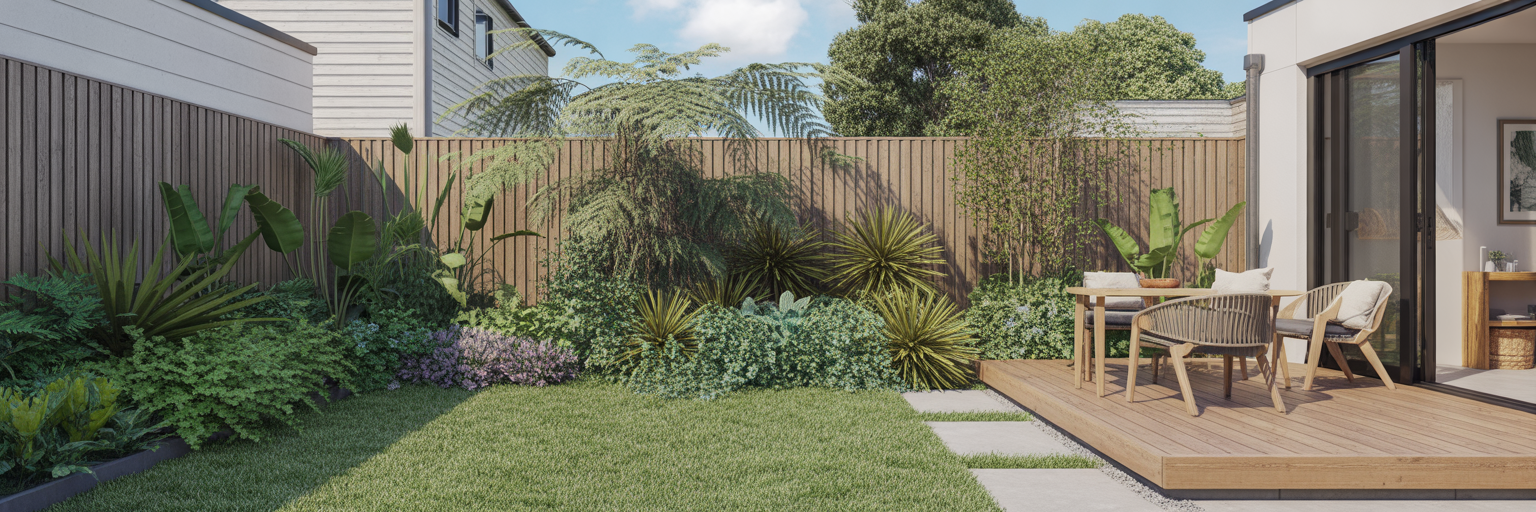
One of the most appealing ways to create privacy is by using plants. A well planned garden can act as a living screen that softens the hard edges of the urban environment. These "green screens" not only block views but also add beauty, absorb sound, and connect your home to nature. There are several effective landscaping for privacy ideas that work wonderfully in smaller Kiwi gardens.
Here are a few techniques for creating a natural barrier:
- Planting in layers: Instead of a single row of hedges, use a mix of hardy native NZ plants like griselinia, pittosporum, and corokia. By layering plants of varying heights and textures, you create a dense visual barrier that feels lush and organic rather than wall like.
- Pleached trees: This is the clever technique of training trees to form a screen on tall, clear trunks. It allows you to create privacy at a higher level, screening views from a neighbour's second storey window while keeping the space below open.
- Vertical gardens and climbers: For tight spaces like balconies and courtyards, a trellis with climbing plants like star jasmine or a dedicated vertical garden system is a fantastic space saving solution. It provides green screening without taking up valuable floor area.
Thoughtful planting can significantly enhance a home's comfort and usability. Integrating these ideas can be a key part of home renovations aimed at improving outdoor living. For a second home on the same section, privacy also needs to be coordinated with access and shared outdoor space, as covered in our guide to site planning for a second dwelling.
Finding the Balance Between Private and Neighbourly
Ultimately, great design is about creating a sense of personal space without resorting to complete isolation. The goal is not to shut the world out entirely but to thoughtfully control the connection between your home and the street. It is about balancing privacy and community. Semi transparent boundaries, like a low front fence with strategic gaps or a carefully trimmed hedge, can define your property while still allowing for a friendly wave or a quick chat with neighbours passing by.
A truly well designed home feels like a private retreat that is also a positive part of its neighbourhood. It cleverly combines smart window placement, stylish screening, and lush landscaping to create a sanctuary that is both secure and connected. It proves that being clever and thoughtful with design is far more effective than simply being closed off. If you would like to discuss creating this balance in your own project, please get in touch with us.