
Why a Smarter Home Matters in New Zealand
We all know the feeling. You wake up to a crisp, sunny morning, only to be hit by a southerly blast by lunchtime. New Zealand’s ‘four seasons in one day’ climate is part of our identity, but it also means our homes are constantly battling the elements. For too many Kiwis, this results in damp, chilly winters spent huddled around a heater, watching the power bill climb. The health effects of living in a cold, damp house are well documented, yet it remains a common experience.
But what if your home could work with our climate, not against it? Creating one of the best energy efficient homes NZ has to offer is not about filling it with complicated technology. It’s about making smart, deliberate choices from the very beginning. It’s about designing a home that naturally stays warm in winter and cool in summer. This guide is about the practical steps towards building a warm dry home, a place that offers genuine comfort and long term affordability for your family. It’s about creating a sanctuary that feels good to live in, no matter what the weather is doing outside.
The Foundation of Comfort is Good Insulation

Think of a well insulated home like a good chilly bin. It’s designed to create a thermal barrier, keeping the cold out and the warmth in. This simple principle is the absolute foundation of a comfortable and efficient home. Without it, any heat you generate from the sun or your heating system will quickly escape. A continuous thermal envelope is crucial, and this means focusing on three key areas.
- Ceiling: This is where most of the heat in your home is lost. Hot air rises, so making your ceiling insulation the top priority is a non negotiable.
- Walls: Insulating your walls wraps your living spaces in a protective blanket, creating a complete thermal shield that stops warmth from seeping out.
- Underfloor: This is essential for preventing cold and damp from rising from the ground, particularly in houses with suspended timber floors. It makes a huge difference to how warm your feet feel on a cold morning.
When considering how to insulate a house NZ builders often work to the Building Code minimums. Our guide to how the NZ Building Code shapes home design explains the role of those minimum performance requirements. However, we believe in going further. Investing in higher rated insulation like glass wool, polyester, or natural wool is a core principle of our high performance design approach. If you want the broader picture, Understanding High-Performance Homes explains how insulation, ventilation and solar gain work together. As research from the New Zealand Green Building Council shows, homes built to higher standards are warmer and use significantly less power. Our Homestar Practitioner article also looks at the rating framework behind healthier, more efficient homes. It’s an upfront investment that pays you back in comfort and savings for years to come.
Working with Nature Through Passive Design
Beyond insulation, the smartest way to create a comfortable home is to let nature do most of the work. This clever approach is called passive design. It’s about using the sun, shade, and wind to keep your home at a pleasant temperature all year round, without relying on mechanical heating or cooling. It’s a fundamental part of our concept design process, where we orient the building to make the most of its environment.
Capturing Free Heat from the Sun
The sun is a powerful, free source of heat. The key is to capture it when you need it most. In New Zealand, this means orienting your main living areas and largest windows to the north. This allows the low winter sun to stream deep into your home, warming the space naturally throughout the day. It’s a simple idea with a massive impact on your winter comfort and power bills.
Storing Warmth with Thermal Mass
Once you’ve captured that free solar heat, you need a way to store it. This is where thermal mass comes in. Materials like a polished concrete floor slab or a strategically placed concrete block wall act like a natural heat battery. They absorb the sun’s warmth during the day and then slowly release it back into the home during the cool evening and night. This helps to stabilise the internal temperature, preventing those sharp drops when the sun goes down.
Natural Cooling for Summer Comfort
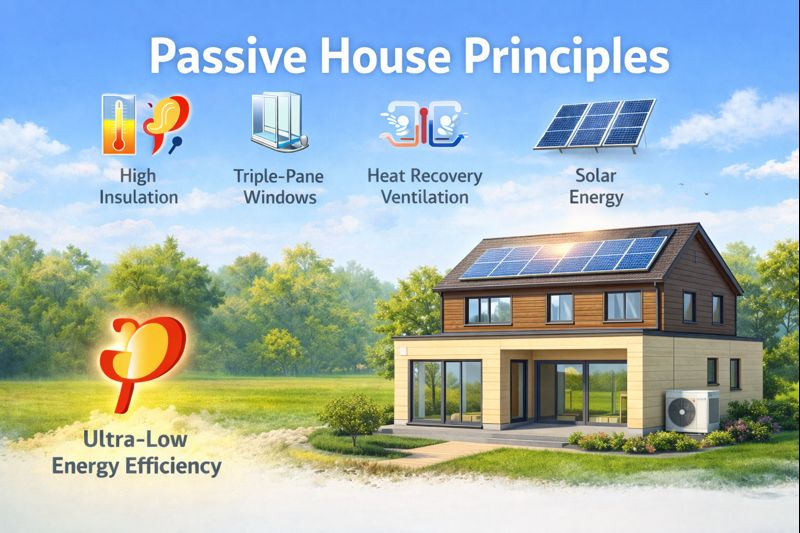
The same principles of passive design for heating can also be used for cooling. To prevent overheating in summer, we design features like eaves or pergolas - sized for your home - that block the high, intense summer sun from hitting your windows. We also encourage natural airflow by placing windows on opposite sides of a room. This creates cross ventilation, allowing a gentle breeze to flow through and cool the house down without needing an air conditioner, this can be taken a lot further, with full high-performance or passive house design, keeping the house at stable temperatures with mechanical heat recovery ventilation.
The Role of High-Performance Windows

Even in a well insulated home, windows can be a major weak point for heat loss. We’ve all felt that chill standing next to a single pane of glass on a frosty night. This is where high performance windows become essential. The most common upgrade is standard double glazing, which uses two panes of glass separated by a sealed air gap. This gap acts as an insulator, immediately reducing heat loss.
However, to truly maximise performance, we recommend taking it a step further with Low-E, or low-emissivity, glass. This involves an invisible metallic coating on the glass that reflects heat. In winter, it reflects warmth back into the room. In summer, it reflects the sun’s heat away from the house. When you’re looking at the double glazing windows offerings in NZ, asking for a Low-E option is one of the best investments you can make for year round comfort.
Of course, the technology only works if it’s part of a smart design. The size and placement of your windows are just as important as the glass itself, connecting directly back to the passive design principles we discussed earlier. High performance windows are an integral feature in all of our new build homes. This, like many parts of a home can be taken further with UPVC or Timber frames with high-performing glazing.
Comparing Window Glazing Options
This table illustrates the performance benefits of upgrading from standard single glazing. The data shows how investing in high performance windows like Low-E double glazing provides superior thermal comfort and a healthier living environment.
Powering Your Home with the Sun
Once you have a home designed to conserve energy, the next logical step is to generate your own. Installing solar panels across NZ wide is becoming increasingly popular, and for good reason. New Zealand receives plenty of sunshine hours to make photovoltaic, or PV, systems a very practical way to produce clean electricity right on your own rooftop.
The main consideration is having a north facing roof area that is free from significant shading from trees or other buildings. With a well positioned system, you can drastically reduce your reliance on the grid and watch your monthly power bills shrink. It’s a long term investment in your home’s financial sustainability. For those wanting to take it further, battery storage systems can be added. These allow you to store excess solar power generated during the day for use at night or during a power cut, giving you even greater energy independence. As EECA, a reliable source for guidance, highlights in its resources on designing for energy efficiency, integrating solar is a key part of a modern, smart home. If you have more practical questions, you might find answers in our frequently asked questions section.
Keeping Your Home Healthy and Dry
We’ve all seen it, condensation weeping down the windows on a cold morning. In modern New Zealand homes, the moisture from everyday activities like cooking, showering, and even breathing can get trapped inside. While opening a window helps, it also lets all that precious warmth escape, which has implications on the running costs of keeping your home warm, and cool depending on the season, and where in New Zealand your home is.
This is why a balanced mechanical ventilation system is so important. These systems, often called Mechanical Heat Recovery Ventilation or MHRV, are the final piece of the puzzle for building a warm dry home. They work continuously in the background to ensure excellent air quality without wasting energy. Here’s how:
- Stale, moist air is extracted from rooms like kitchens and bathrooms.
- Fresh, filtered air is drawn in from outside.
- A heat exchanger transfers warmth from the outgoing air to the incoming fresh air.
- The pre warmed fresh air is distributed to living areas and bedrooms, maintaining a healthy air quality without losing heat.
This process ensures your home is not just warm and efficient, but also genuinely healthy and comfortable to live in. If you’re ready to start designing a home that performs beautifully, we invite you to book a meeting with us to discuss your project.