
Understanding Spatial Flow in Your Home
The classic Kiwi dream is a home that can host a lively summer BBQ one day and offer a quiet personal retreat the next. We all want a space that adapts to the rhythm of our lives. This adaptability is shaped by something called spatial flow. In simple terms, it is the way a home guides you from one room to another, making movement feel natural and easy. You have likely been in a house where the layout felt awkward, forcing you down long corridors or through one room to get to another.
Achieving both privacy and connection is not about compromise but about clever planning. It is about creating a home that feels both open and intimate. The solution lies in thoughtful architectural spatial flow ideas that consider how you actually live. These principles are central to our design philosophy, which focuses on creating spaces that are both functional and beautiful.
Creating Private Sanctuaries Without Isolation
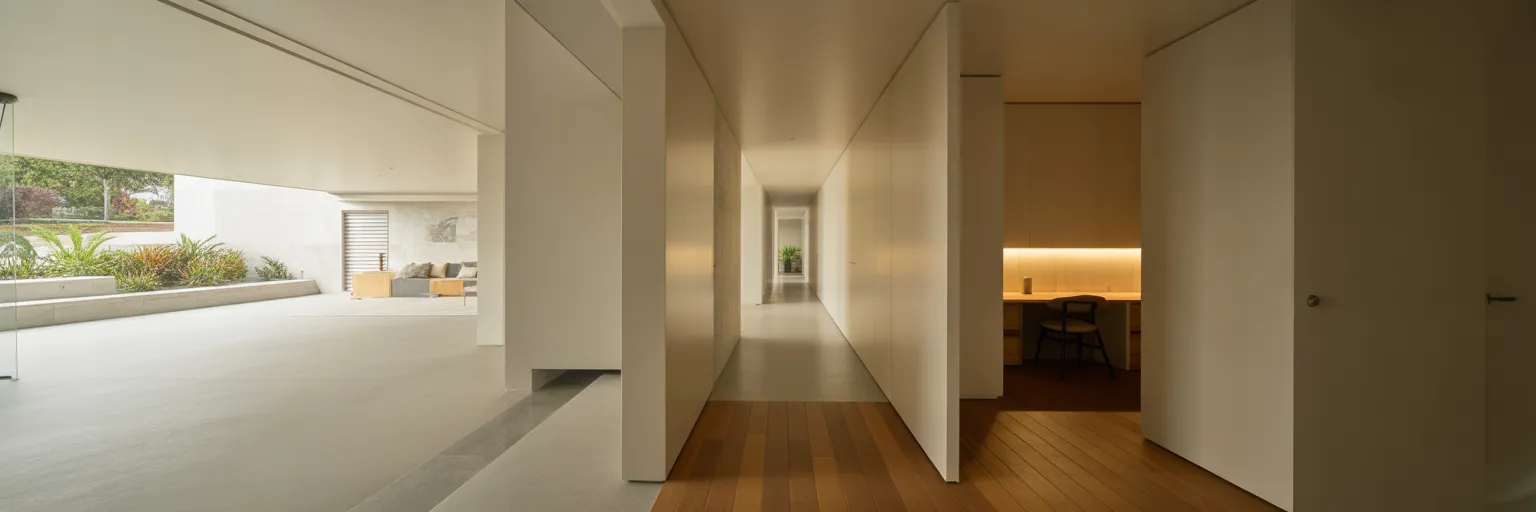
While an open, welcoming home is wonderful, we all need spaces to recharge. This is where the concept of ‘zoning’ becomes incredibly useful. It involves dividing your home into distinct areas based on their use, which is a key part of balancing privacy and connection in homes. Think of it like this:
- Public zones: The living room, kitchen, and dining areas where you welcome guests.
- Private zones: Bedrooms, personal studies, and bathrooms that are your personal retreats.
- Transitional zones: Hallways, staircases, or small courtyards that act as buffers.
These transitional spaces are more than just pathways. They create a mental and physical separation, signalling a shift from a social to a private area. A simple change in floor level, a narrower hallway, or a different flooring material can subtly communicate this change. Just as important is the management of sightlines. Good design ensures you cannot see directly from the front door into a private bedroom. This creates a sense of security without making the house feel closed off. When planning new build homes, integrating these ideas from the very beginning is fundamental to a successful layout.
Fostering Connection Through Thoughtful Layouts
Just as we need private sanctuaries, a home must also have spaces that bring people together. The traditional open plan concept has evolved into something more nuanced, often called a ‘broken plan’ layout. This approach allows for open plan living with private zones by using clever features to define areas without solid walls. A double sided fireplace, a change in ceiling height, or a large piece of furniture can create distinct zones for cooking, dining, and relaxing within one larger space.
The kitchen often serves as the social heart of the Kiwi home. A layout with a large island bench naturally encourages conversation, allowing family and friends to gather while meals are prepared. A key element of modern home design in New Zealand is the seamless indoor outdoor connection. Large sliding or bifold doors that open onto a deck effectively extend the living space, perfect for social gatherings. These connected layouts also improve daily family life. A parent can cook dinner while keeping an eye on children playing nearby. This link between layout and lifestyle shows how our environment influences our wellbeing, a concept supported by research from organisations like BRANZ, which explores how thoughtful design supports family health. You can see examples of these connected spaces in our portfolio of projects.
Using Materials and Light to Guide Movement

Beyond the floor plan, the sensory details of a home play a huge role in shaping its flow. Using a consistent flooring material, like timber or polished concrete, across the main living areas creates a cohesive feel that subtly guides movement from one space to the next. Lighting is another powerful tool for defining spaces without walls. Different layers of light serve different purposes:
- Bright, general light for social hubs like the kitchen.
- Softer, focused light for creating cosy reading nooks or quiet corners.
- Directional light to highlight a piece of art or an architectural feature.
Features like a beautifully crafted staircase or a large window framing a garden view can act as natural focal points, drawing you through the home. Ultimately, the ideal luxury home layout design is deeply personal. A family needing quiet areas for working from home will have different priorities than one that prioritises large, communal living spaces. This is where a tailored approach to high end home design becomes so important. It ensures the final space truly reflects your lifestyle. These are the kinds of details we consider in our high performance design approach. If these ideas resonate with you, we would be happy to discuss your project.