
The Blueprint Behind Every Kiwi Home
Every home built in Aotearoa, from a compact city dwelling to a sprawling rural retreat, shares a common foundation. This foundation is not made of concrete or steel, but of a set of performance goals known as the New Zealand Building Code. Managed by the Ministry of Business, Innovation and Employment (MBIE), the Code is less like a strict instruction manual and more like a framework that sets the desired outcome: a safe, healthy, and durable home.
Its purpose is to ensure every new build can handle our country’s unique conditions, from damp winters to seismic activity. These performance standards are not a final hurdle to clear. Instead, they are a starting point that informs the entire design process. From the initial sketches of our concept design service to the final material selections, the Code guides decisions to create a home that truly works for its occupants and environment.
Designing for Warmth and Energy Savings
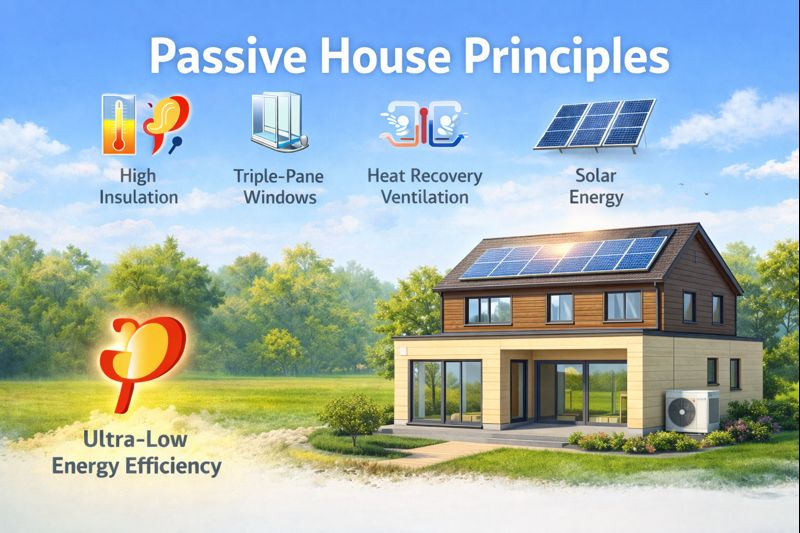
We all know the feeling of a cold, draughty house and the power bills that come with it. The Building Code’s Clause H1 directly addresses this by setting standards for energy efficiency. As the Ministry of Business, Innovation and Employment outlines in its official guidance, the goal is to create comfortable homes that are cheaper to run year round. This has a significant impact on design choices. For homeowners wanting to go beyond minimum compliance, passive design shows how orientation, shading, insulation and ventilation can work together as part of the architecture.
Key design responses include:
- High-performance insulation: Specifying quality insulation for walls, floors, and ceilings creates a continuous thermal barrier. This simple element is fundamental to keeping warmth inside during winter and keeping the heat out in summer.
- Smarter window design: The shift to double glazing and thermally broken frames is now standard practice. Good design also considers window placement to capture free heat from the low winter sun, while well-placed eaves provide shade from the high summer sun.
- Airtightness and ventilation: Sealing the building envelope prevents annoying draughts and heat loss. However, a sealed home needs to breathe. This is balanced with a ventilation system that provides a constant supply of fresh air without letting all the warmth escape. Our article on creating a breathable and comfortable home explores that relationship in more detail.
These features work together to create truly energy efficient homes NZ residents can enjoy. It is a core part of how we approach our high performance design service, ensuring comfort is built in from the start.
Keeping Your Home Dry and Weathertight

Clause E2 of the Code focuses on external moisture, a critical requirement for preventing the leaks and dampness that can lead to mould. Many Kiwis are all too familiar with the health issues that arise from a damp home. This clause shapes the design of the ‘building envelope’, which acts as the home's protective outer layer, much like a high quality raincoat.
Designers must select appropriate cladding systems based on the local climate, particularly the wind zone. A coastal property in Wellington will have different requirements than a sheltered home in Hamilton. The real magic, however, is in the details. We pay close attention to junctions and openings, specifying flashings around windows and doors to meticulously channel water away from the structure. These are some of the most important home design requirements NZ has for long term durability. Getting these details right means a healthier indoor environment and a structure protected from decay, which helps avoid the need for extensive renovations down the track.
Building Strong for Aotearoa's Elements
Living in New Zealand means living with the forces of nature. The Building Code’s structural requirements are there to ensure a home can safely withstand events like earthquakes and high winds. As the Natural Hazards Research Platform highlights, building a more resilient home is about making deliberate choices from the ground up. This directly influences a home's form and structure.
For an effective earthquake proof house design, designers often favour regular, symmetrical floor plans over complex shapes with large unsupported spans, as these can create structural weak points. Foundation design is never a one size fits all solution. It is tied directly to the specific ground conditions of the site to provide a stable base. Material selection also plays a vital role. For instance, using lighter roofing and cladding materials reduces the building's overall mass, which in turn lessens the seismic forces it must resist during a tremor. These interconnected decisions are fundamental to creating safe and secure new build homes.
The Real-World Value of a Code-Compliant Home

The Building Code is not a collection of separate rules but a complete system that works together to create a high performing home. When you are thinking about building a house in NZ, understanding these integrated benefits is key. Proven design pathways show how these requirements can be met in a cohesive package.
For the homeowner, the tangible benefits are clear:
- Lower energy bills from a well insulated and airtight home.
- A healthier indoor environment free from dampness and mould.
- Peace of mind knowing the home is structurally sound and resilient.
Bringing these elements together requires careful planning and coordinated documentation. That is also why decisions made early in design, including when to involve your builder, can have a meaningful effect on buildability, cost and the construction process. At Modal, we believe this framework is the key to delivering quality living spaces. If you are ready to start your project, we would love to hear from you. Please get in touch with us to discuss your ideas.