
Thinking Beyond a Simple Add-On
The classic Kiwi backyard is changing. For generations, the quarter-acre dream was defined by a sprawling lawn and maybe a lemon tree. Now, it’s about making intelligent use of the space we have. We’re seeing a growing number of New Zealanders adding secondary dwellings, whether for grandparents, a home office, or rental income. If you are at the beginning of that journey, our guide to infill housing in New Zealand provides useful context around how these projects work. This shift is more than a construction project. It is an opportunity to improve how your entire property functions and feels.
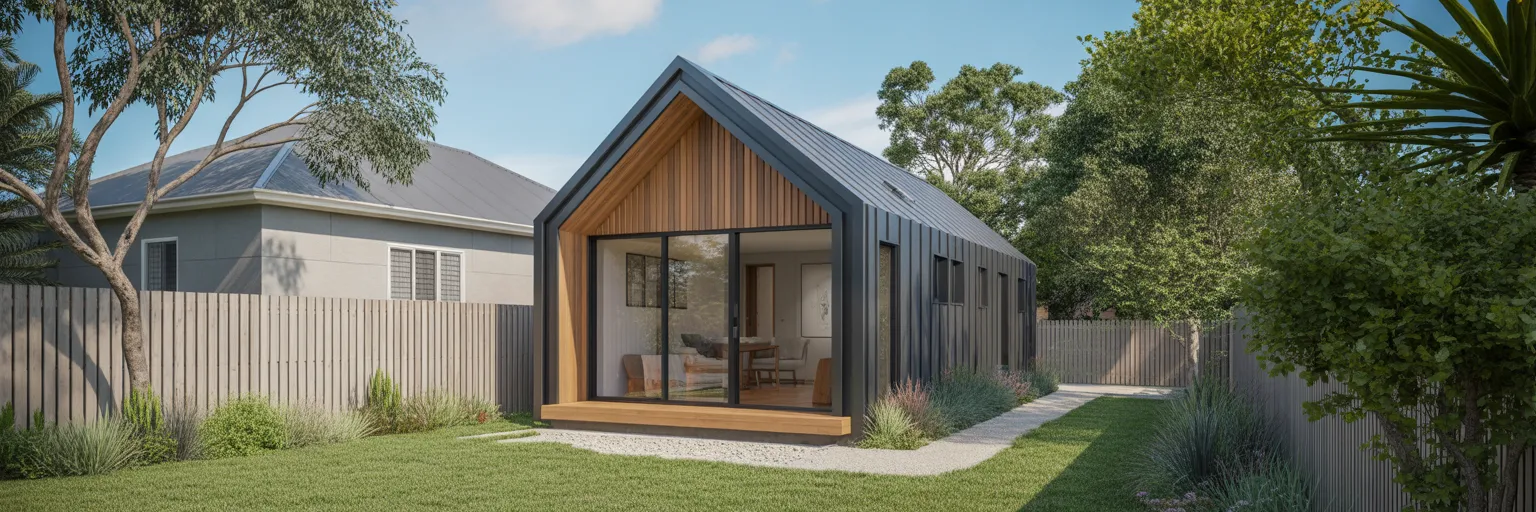
This is where cohesive site planning comes in. In simple terms, it means looking at your main house, the new building, your garden, and the driveway as a single, connected system. It’s the opposite of the common mistake of just plonking a prefabricated cabin in the backyard without much thought. That approach often creates awkward, leftover spaces, blocks afternoon sun, or compromises the privacy of the main home.
Successful secondary dwelling design in NZ is about planning that considers the land, the visual links between buildings, and how you live your life day to day. It’s about creating a property that works better for everyone who uses it. When done well, the new addition feels like it was always meant to be there, enhancing the whole site rather than just occupying a corner of it. To see how these ideas come to life, you can explore a gallery of our completed projects.
Working with Your Land, Not Against It
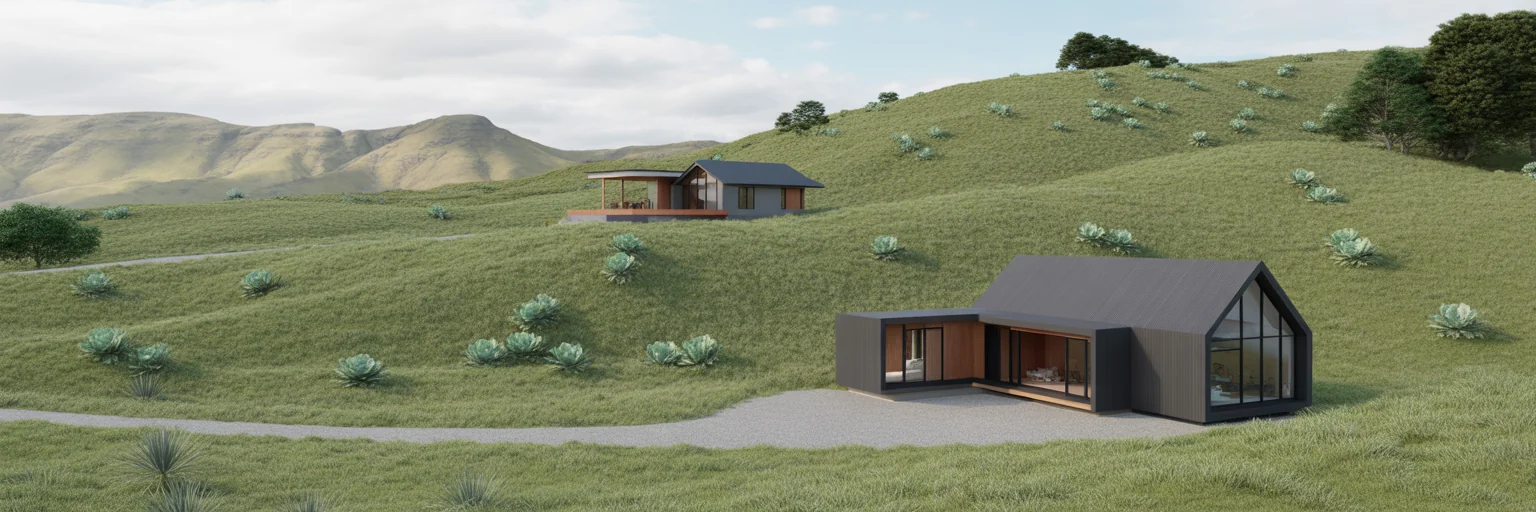
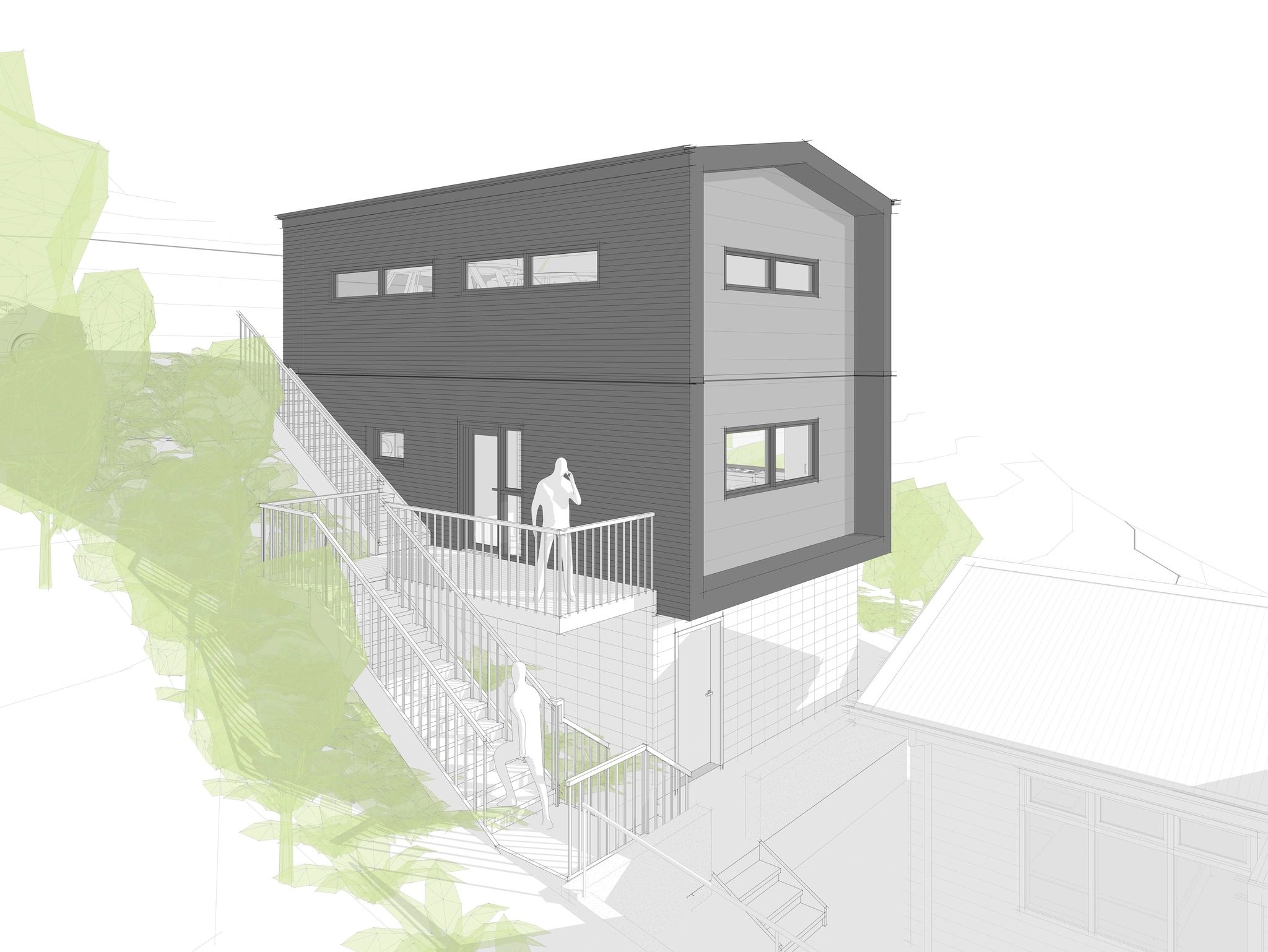
Before thinking about building materials or colours, the first step is to understand the land itself. Every section has its own unique character, and working with these natural features is the foundation of good design. Start by walking your property and taking note of its topography. Where are the flat areas, and where does the ground slope? A gentle slope isn’t a problem. It can be an asset, helping to create separation and privacy between the main house and the new dwelling or lifting a building up to capture better views.
Thoughtful positioning also means working with our country's distinct natural elements. Orienting a building to capture maximum sunlight, especially the lower winter sun, makes a huge difference to its warmth and comfort. Equally important is providing shelter from prevailing winds, whether it’s a biting Wellington Southerly or a persistent Canterbury Nor’wester. This careful placement makes the new space more pleasant to live in and is a core principle of our approach to high performance design.
Great site planning for minor dwellings also respects what’s already there. Instead of removing a mature pōhutukawa tree, why not design around it and make it a feature? Existing rock formations or established garden beds can all be integrated to maintain the site’s unique feel. This approach helps maintain a healthy balance between buildings and green space, preserving the connection to the outdoors that is so central to the Kiwi lifestyle.
Creating a Unified Look and Feel
A new building on your property should feel like it belongs, but that doesn’t mean it needs to be a miniature clone of the main house. The goal is visual harmony, creating a sense of connection that makes the whole property feel complete. A modern studio can sit comfortably alongside a traditional villa if they share a common design language. This is where thoughtful cohesive property design ideas come into play.
Here are a few ways to create that connection:
- Shared Materials: Using the same roofing profile, a similar cladding style like vertical timber or classic weatherboard, or matching the window joinery colour creates a strong and immediate visual link.
- Complementary Colours: The colour palette for the secondary dwelling can complement the main house without being identical. Think a darker shade of the same family or a contrasting colour that works well with the original.
- Consistent Forms: Echoing the roof pitch of the main house or using similar window proportions in the new building can create a subtle but effective sense of unity.
This idea of complementing rather than matching is key to successful backyard studio design. A modern identity that still harmonises with a traditional villa is a challenge we often tackle in our infill dwelling projects. Landscaping is also crucial for tying everything together. Well-planned pathways using materials like gravel or pavers guide the journey between the two buildings, while thoughtful planting can soften the structures and visually connect them.
Smart Planning for Access, Privacy, and Outdoor Living
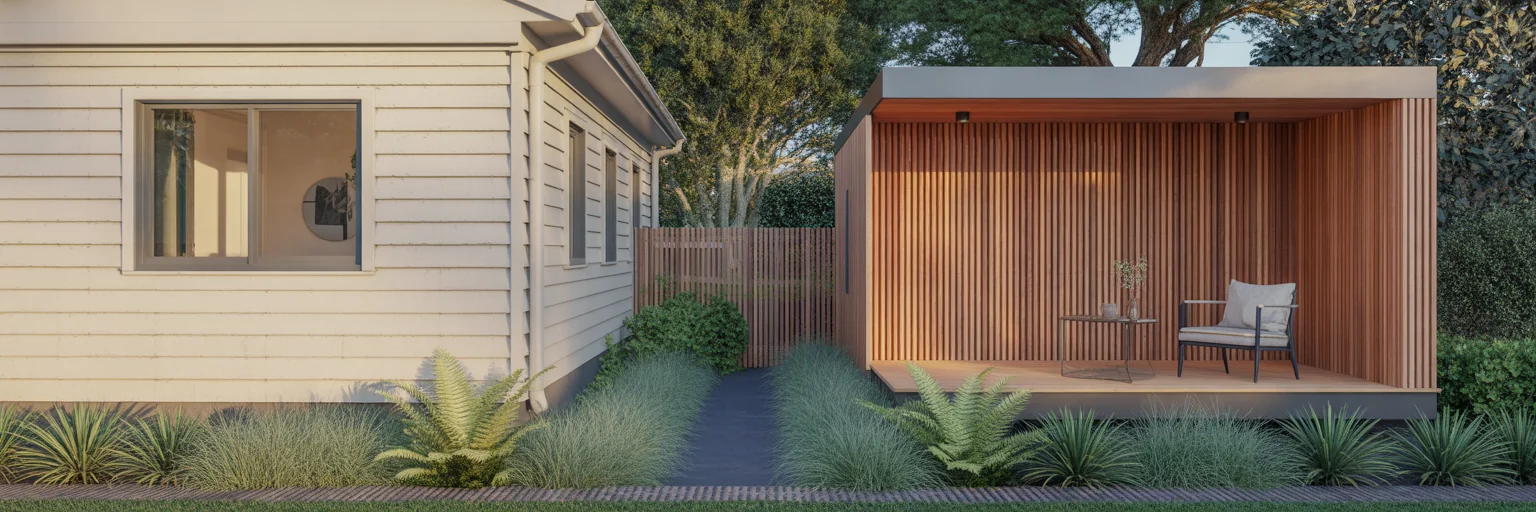
A well designed secondary dwelling considers how people will actually use the spaces, both inside and out. One of the first practicalities to address is access. How will people get to the new building? Planning clear, safe, and well lit pathways is essential. You also need to consider vehicle access and parking, ensuring it doesn’t dominate the garden or create a sea of concrete. Using permeable pavers or softening driveway edges with planting can make a big difference.
Just as important is privacy. No one wants to feel like they are living in a fishbowl. Clever placement of windows and doors is the first line of defence, preventing direct views into the living areas or bedrooms of either home. From there, you can use screens, fences, and strategic planting to create secluded outdoor areas. Our guide to creating privacy in urban Kiwi homes explores these techniques in more detail. A stand of native grasses or a thoughtfully placed hedge can create a sense of separation without feeling like a fortress. These are great sleepout design ideas that enhance liveability.
Every Kiwi home, no matter its size, needs a spot for a barbie and a place to enjoy the sun. A functional, private, and sunny courtyard or deck for the secondary dwelling should feel intentional, not like a forgotten patch of grass. Finally, thinking about service connections for water, power, and drainage early in the process is critical. Knowing where these services run on your property will influence where the building can be placed. Extra roof and hardstand area can also affect stormwater planning, so it is worth understanding when stormwater retention or detention tanks may become part of the design.
A Smarter Way to Grow Your Property
Adding a second building to your property is a significant design opportunity, not just a construction task. Thoughtful planning delivers long term value that goes far beyond extra floor space. It improves daily living, enhances the property’s overall appeal, and ensures the new addition feels like a natural extension of your home. This holistic approach is crucial when integrating a granny flat NZ or any other secondary unit.
By considering the land, the visual story, and the practical needs of everyone from the very beginning, you can ensure your new building is a successful and valuable addition for years to come. If you're ready to explore these ideas for your own property, the next step is to get in touch.