The Unique Demands of a Coastal Build
Anyone living on the New Zealand coast knows the constant battle with the elements. You wipe the salty film from your windows one day, only for it to return on the next sea breeze. That persistent dampness can make everything feel slightly clammy. These are not just minor annoyances. They are powerful environmental factors that a home must withstand. The corrosive, salt laden air relentlessly seeks out any unprotected metal, while high humidity creates the perfect conditions for mould. Add the force of strong, persistent winds, and you have a recipe for accelerated wear and tear.
Successfully building a house on the coast means treating these challenges not as problems, but as core design parameters. A thoughtful architectural approach considers these forces from the very beginning. For a wider overview of site orientation, views and outdoor living, see our guide to designing a home for your Kiwi coastal section.
Materials Built to Brave the Elements
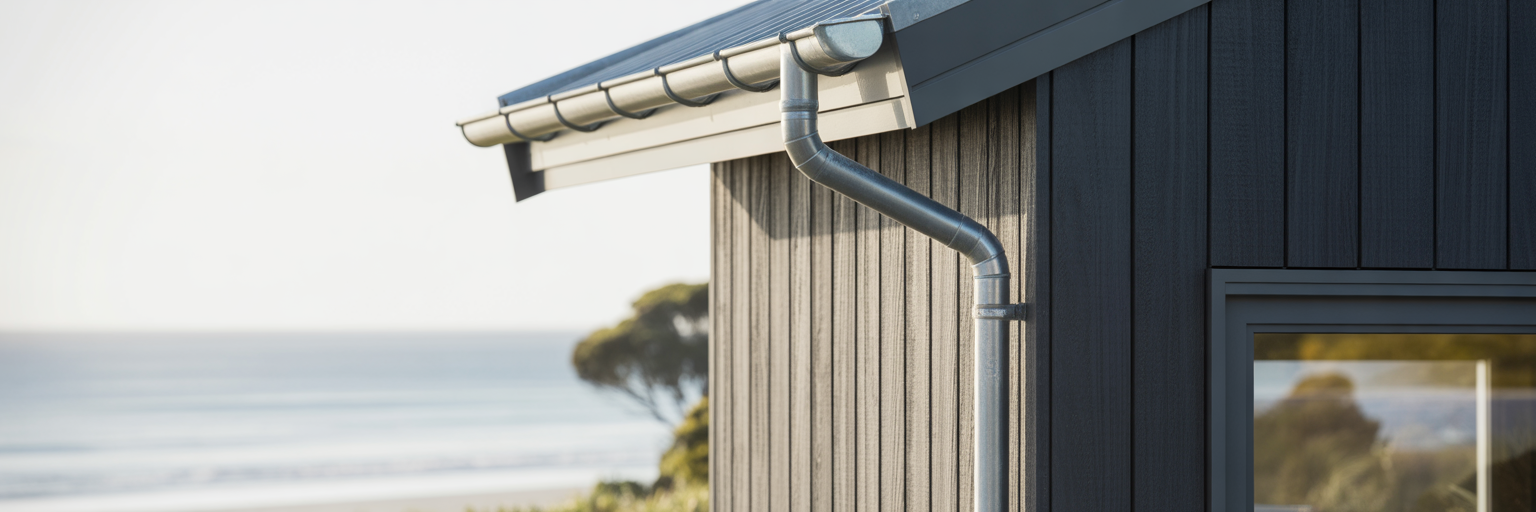
Just as you would choose the right gear for a trek through the bush, selecting the right materials for a coastal home is fundamental. Standard building products often fall short because they are not designed to resist the unique corrosive effects of salt spray. The secret is to choose materials that are inherently tough and to assemble them as a complete protective system. This is where focusing on durable building materials makes all the difference.
Key material choices include:
- Corrosion Resistant Metals: For roofing, window frames, and even the smallest screws, using marine grade stainless steel, bronze, or specially coated aluminium is essential. These materials resist the rusting and degradation that plague standard metals in a salty environment.
- Durable Cladding: Your home’s first line of defence needs to be robust. Treated timbers like cedar or pine, fibre cement sheets, and modern composite products are excellent choices because they resist moisture, decay, and warping far better than untreated alternatives.
- Protective Systems: Cladding does not work in isolation. It is part of a system that includes a properly installed building wrap or rigid air barrier behind it. This layer manages any moisture that gets past the cladding, while high quality paint or stain finishes provide the outermost layer of protection.
If timber is part of the palette, our article on timber cladding in New Zealand provides additional context on material choice, maintenance and detailing.
Smart Ways to Manage Humidity
While durable materials protect the house itself, managing the air quality inside is just as important for comfort and health. Coastal air is naturally humid, and everyday activities like cooking and showering add even more moisture. Without proper management, this can lead to condensation, dampness, and an unhealthy living environment. The key is a two part approach to home ventilation for humidity. First is passive ventilation, which uses clever design to harness the natural sea breeze. By strategically placing windows and doors, you can create cross breezes that flush out damp, stale air and replace it with fresh air.
However, passive design alone is not always enough. This is where mechanical ventilation becomes necessary. High quality extractor fans in kitchens, bathrooms, and laundries are non negotiable, as they remove moisture at its source before it can spread. Effective ventilation creates one of the cornerstones of a healthy, high-performance home.
Designing for Year Round Comfort

A dry home is a great start, but a truly comfortable coastal home maintains a pleasant temperature all year without relying heavily on heating or cooling. This is where smart coastal home design comes into play, using the environment to its advantage. The concept of passive solar design is central to achieving this. It involves shaping the home to work with the sun’s path. For example, correctly sized eaves or pergolas can block the high, intense sun of summer, keeping the interior cool. In winter, when the sun is lower in the sky, those same eaves allow sunlight to stream in, providing free warmth.
This strategy is supported by high performance insulation in the walls, ceiling, and underfloor. Good insulation is not just for keeping warm. It acts as a thermal barrier, keeping the home warmer in winter and cooler in summer, which also helps reduce condensation. The final piece of the puzzle is modern glazing. Double glazing or glass with low-e coatings prevents heat from escaping in winter and stops it from entering in summer. Getting these details right during the preliminary design phase is what creates truly energy efficient coastal homes.
Building Strong Against Wind and Rain
Beyond daily comfort, a coastal home must be designed to stand strong when the weather turns. New Zealand’s coastline is known for its high wind zones and intense rain, so a storm proof house design is not a luxury, it is a necessity. The entire structure, from the foundations to the roof, must be engineered to handle these powerful forces safely.
First, the shape of the roof plays a significant role. Simple, aerodynamic roof forms like a hip roof are inherently better at deflecting strong winds compared to more complex shapes with multiple gables, which can catch the wind.
Second, it is not just the cladding material that matters, but how securely it is fixed to the structure. In a gale, it is often the fixings that fail, so ensuring they are specified for high wind loads is crucial to prevent panels from being damaged or torn off.
Finally, effective water management is vital. Robust guttering, downpipes, and ground level drainage must be designed to channel heavy rainfall away from the building quickly, protecting its foundations from saturation. These resilience principles connect directly with our article on designing a Kiwi home that lasts. If you are ready to plan a home that is both beautiful and resilient, we are here to start the conversation.