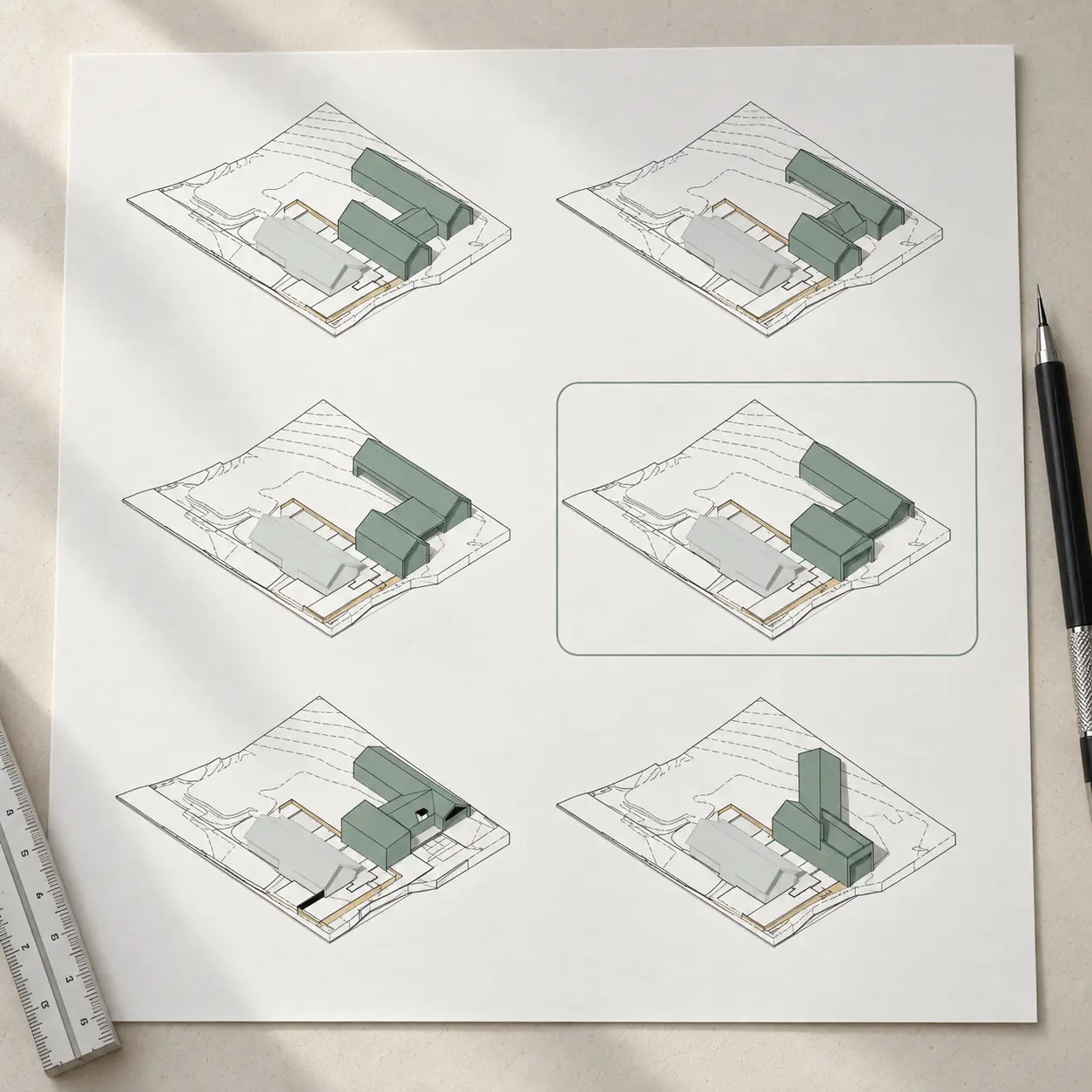
A second dwelling may be possible, but feasibility depends on your site, planning rules, access, services and the proposed building. Some qualifying small standalone dwellings can use a building consent exemption; this does not remove all design, documentation or planning requirements.
Assess the property first
Check the title, easements, access, available building area, hazards and infrastructure. A second dwelling needs workable connections for water, wastewater, stormwater and power. Consider privacy and outdoor space for both homes. A site layout that fits on paper may still be difficult or expensive to service or build.
Understand the small dwelling pathway
As at September 2026, a building consent exemption can apply to qualifying standalone dwellings up to 70 m² when all conditions are met. It requires compliant design, appropriately licensed professionals and council documentation, including the required pre-construction PIM process. Do not assume that floor area alone establishes eligibility. Check the current guidance for the intended start date.
Check planning separately
The building consent exemption and the planning pathway are separate assessments. National standards may permit a qualifying detached minor residential unit without resource consent, but their criteria must be checked. Other site constraints, approvals and private title obligations can still matter. A second dwelling also does not automatically create a separately saleable title.
Compare the available options
A feasibility review can test the location, size, access, servicing and likely approval route before full design begins. Modal’s infill and secondary dwelling service supports this work. If subdivision is part of the goal, discuss it at the beginning so planning, surveying and legal input can be coordinated with the architectural proposal.
Related questions
- Is it better to renovate or rebuild my house?
- How do I know whether my house can be extended?
- What should I check before buying land to build on?
Further guidance
Regulatory guidance checked September 2026. Confirm the current requirements for your project.