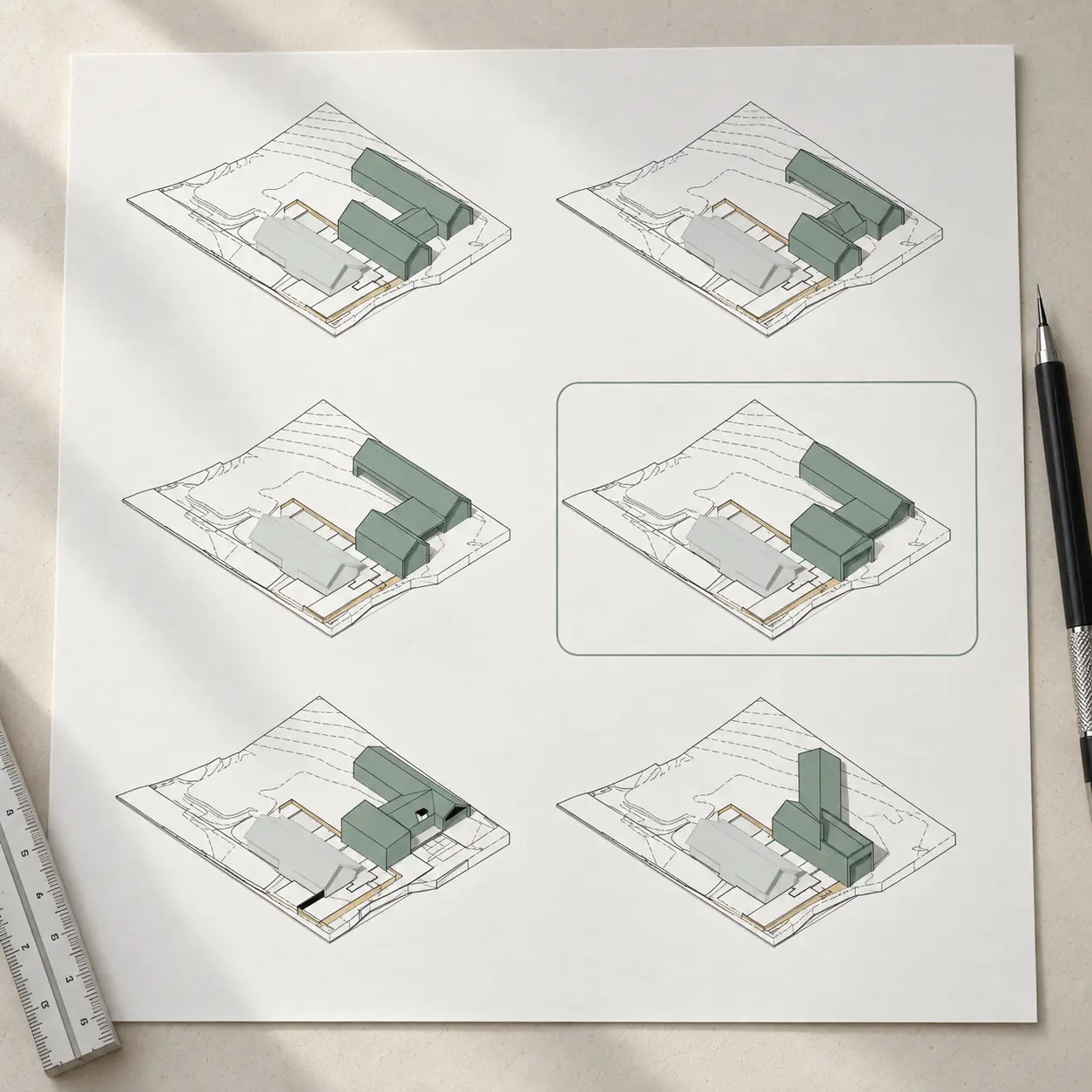
Compare both options against the condition of the existing home, the changes you need, planning constraints and the investment you are prepared to make in your home and lifestyle. Renovating can retain valuable character and structure; rebuilding may suit a home that cannot reasonably support the intended layout or performance.
Start with the existing building
Assess condition, structure, moisture issues, services and the quality of the spaces. A house that appears dated may have a useful underlying layout, while a recently decorated home may conceal major constraints. Existing drawings and consent records help, but an inspection and targeted investigations may be needed before the costs of retaining it can be assessed.
Compare equivalent outcomes
Prepare a realistic scope for each option, considering how each investment would support your everyday comfort, family life and future needs. Compare the completed result, including floor area, comfort, access and outdoor space, rather than comparing a modest renovation with an entirely different new home. Include demolition or remedial work, consultant input, approvals, temporary accommodation and external works in the budgets.
Check what can be approved
An existing building’s position or form should not be assumed to be available for a replacement house. Planning controls, hazards, heritage considerations and other site conditions can affect either option. Establish the applicable pathway early, with specialist planning advice where necessary. Retention may offer opportunities, but it is not a guarantee of an easier consent process.
Test before committing
A short feasibility exercise can compare layouts, likely interventions, cost risks and programme implications. Modal can assess renovation options alongside a new home approach. The aim is a clear decision based on the home you want to achieve and what the property can reasonably support.