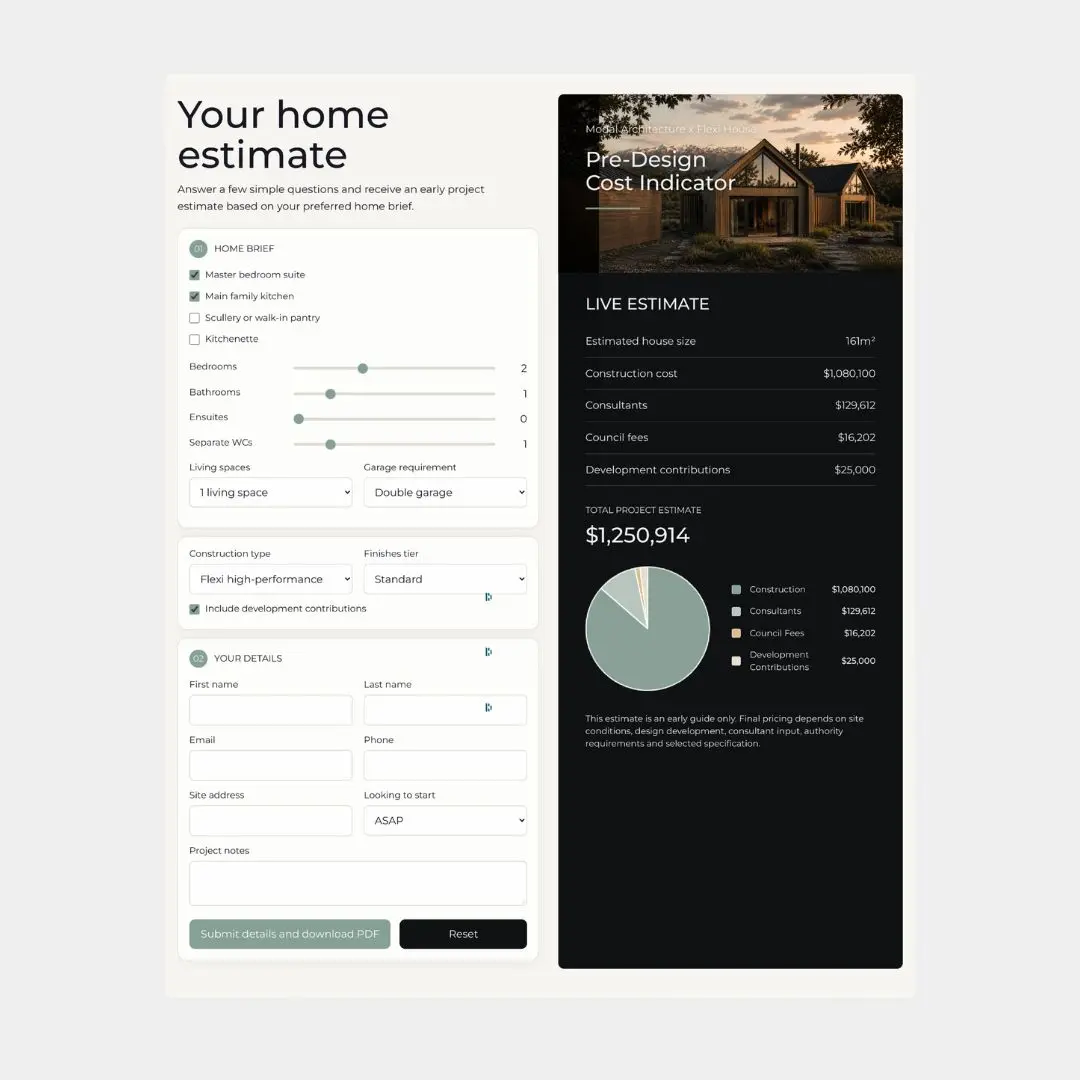
Set a total investment budget around the home and lifestyle you want to achieve. Test the design against cost advice early and keep a separate contingency for uncertainty. Review scope and pricing at key stages, and approve the cost and timing of changes before work proceeds.
Define the whole investment
Treat architectural fees as an investment in the success of your project, and construction as an investment in the home and lifestyle the design makes possible. Set a clear overall limit, with separate allowances for construction, architectural fees, consultants, council charges, site investigations, external works and contingency. Include GST consistently and identify any costs outside the building contract. For a renovation, temporary accommodation, storage and remedial work to the existing building can materially affect the amount available for new work.
Check costs while choices remain open
Obtain builder or quantity surveyor input when the concept is developed enough to assess. Repeat the cost check as the design and specification become more detailed. Cost advice needs clear assumptions, exclusions and a date. If the estimate exceeds the allowance, address the difference before proceeding to more detailed documentation.
Protect what matters most
Direct your investment towards the qualities that matter most to your household, such as comfortable living spaces, lasting materials or room for family life. Rank those priorities so that adjustments preserve what you value. Reducing unnecessary floor area, simplifying a roof or structural arrangement and selecting readily available materials may offer better value than removing the details that make a room work. Consider the cost of maintaining and operating the home alongside its initial construction cost.
Manage changes deliberately
Keep a decision record and request written advice about the cost and programme impact of changes. Contingency should reflect the project’s uncertainty and should not be counted as money available for optional upgrades at the outset. No process can eliminate all cost risk, but early testing and clear approvals improve control. Modal integrates these discussions into our design process for renovations and new homes.