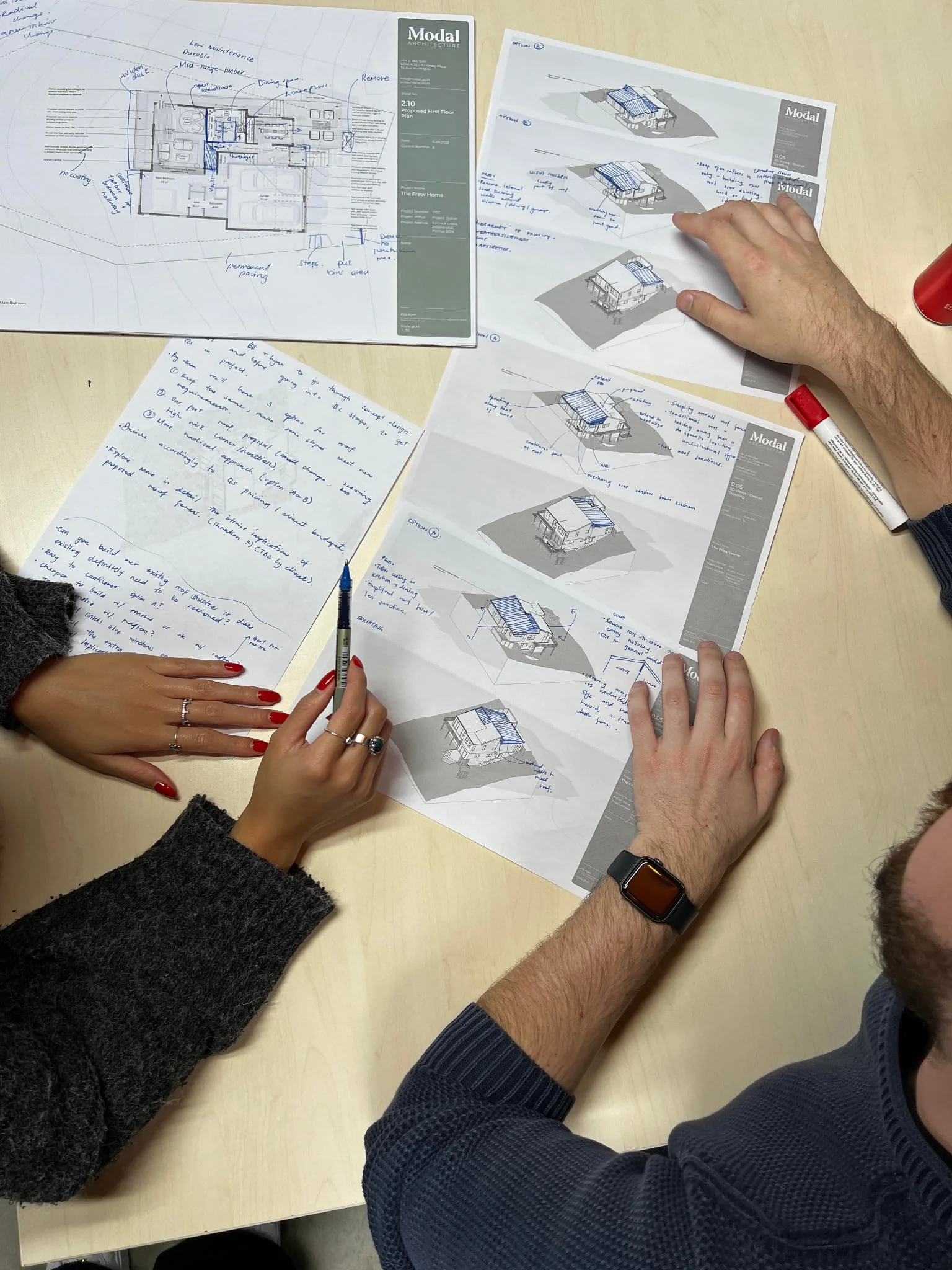
Plan in months for a bespoke home or substantial renovation. An initial programme might allow 4 to 8 weeks for early design and 8 to 16 weeks for development and documentation, with consent processing, consultant work and decisions affecting the overall duration.
Build a programme around the actual scope
The ranges above are illustrative planning allowances, not a promise of Modal’s availability or a fixed industry standard. A small, well-defined alteration may move faster; an ambitious home, difficult site or evolving brief may take considerably longer. Confirm an agreed programme once the scope, required information and consultant team are understood.
Separate design from approvals
Early design includes understanding the site and brief, exploring options and agreeing a direction. Developed and detailed design resolve the layout, materials, structure and documentation. Consent preparation belongs within the design programme, while council processing is a separate period. Resource consent, where needed, can influence the sequence and should be considered before detailed work proceeds too far.
Allow time for information and decisions
Surveys, geotechnical information, engineering and cost advice can affect when drawings are ready for the next stage. Client review time matters too. Changes after a design decision has been agreed can require several consultants to update their work. A realistic programme identifies those dependencies rather than treating every activity as a continuous block of drawing time.
Work backwards from your preferred start
Ask what must happen before tendering, signing a construction contract or ordering long-lead items. The builder’s availability and construction duration are additional to the design programme. Modal’s design process provides a framework for these stages. Start the conversation early enough to allow a considered design and informed cost decisions, particularly for a substantial renovation.